Cold Moon 2026: December Full Moon Date, Time, and Christmas Folklore
Quick Reference
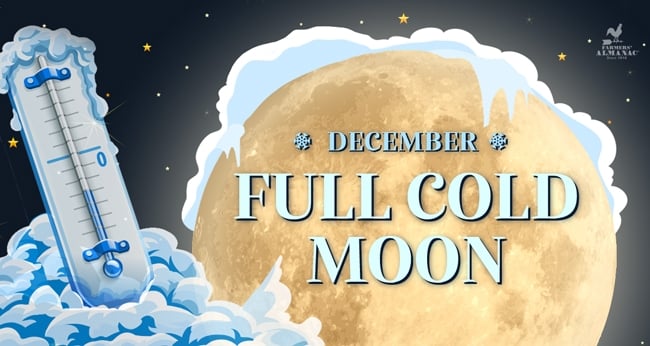
- Cold Moon 2026: Wednesday, December 23, 2026, the night before Christmas Eve
- Peak illumination: 8:28 p.m. Eastern Time (01:28 UTC on December 24)
- Best viewing: Wednesday night, December 23, and it still looks full on Christmas Eve
- Naming rule: the first full Moon of December, the last full Moon of the calendar year
- Why “Cold”: marks the deepest cold of the Northern Hemisphere year, named by Native North American nations and Celtic tradition alike
- Other names: Long Night Moon, Moon Before Yule, Oak Moon, Christmas Moon, Bitter Moon, Popping Trees Moon, and more
- Solstice tie-in: winter solstice falls Monday, December 21, 2026, so the Cold Moon arrives just over two days after the longest night
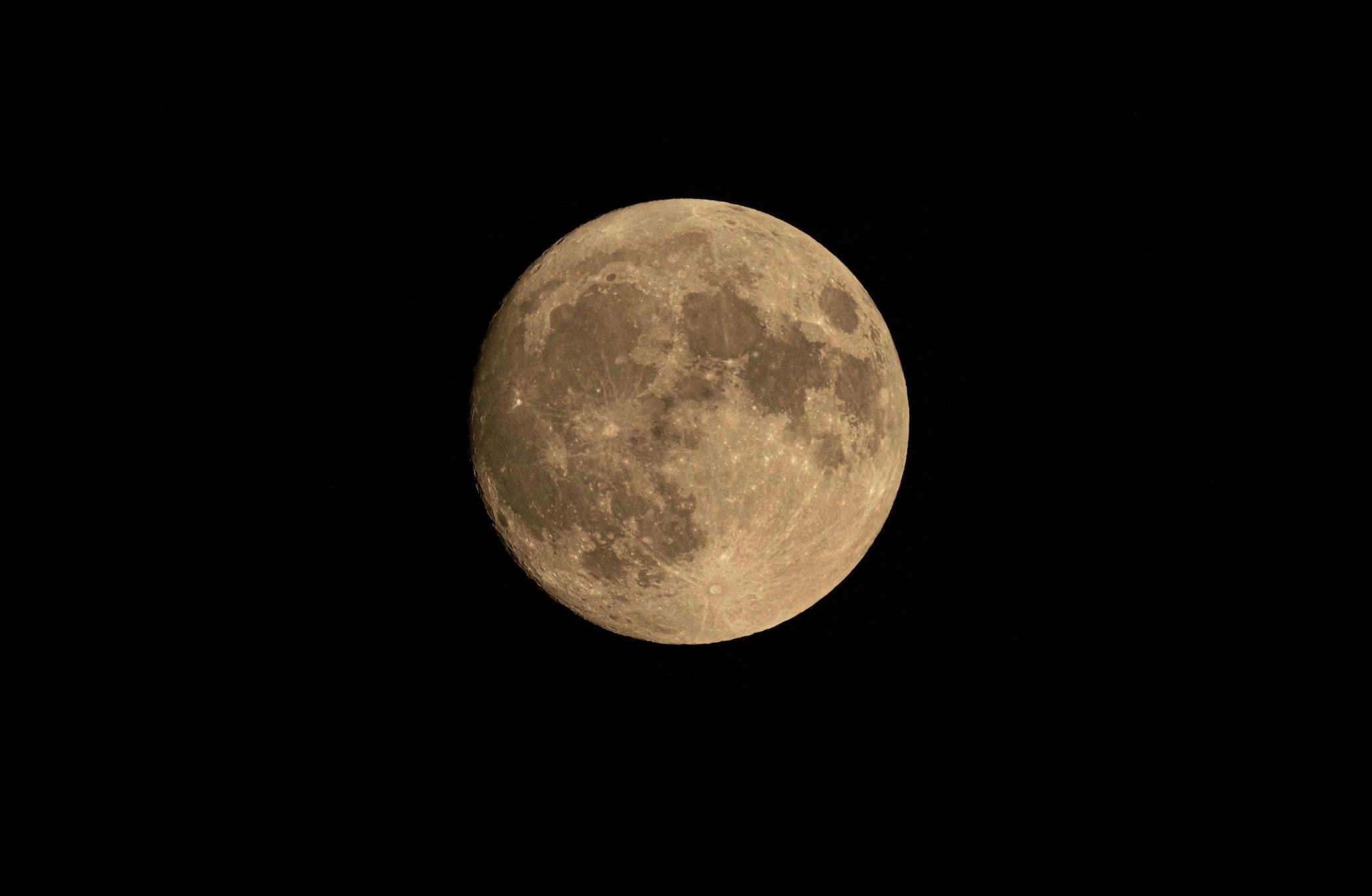
The Cold Moon, the final full Moon of 2026, peaks on Wednesday evening, December 23, at 8:28 p.m. Eastern Time. By midnight, as Christmas Eve begins, the full Moon rides high in the southern sky, light spilling across frozen ground, bare branches, and whatever snow has settled by then. Trees rest deep in dormancy, animal tracks cut clean lines through the white, and the long winter night stretches longer than any other night of the year. Above all that quiet, the bright disc earns the name that has followed it through both Native North American and Celtic tradition for centuries.
When Is the Cold Moon 2026? Exact Date and Time
Full Moon December 2026: Wednesday, December 23
Peak Illumination: 8:28 p.m. Eastern Time (01:28 UTC on December 24)
The Moon reaches full phase at the same moment everywhere on Earth, so the clock shifts by time zone: 7:28 p.m. Central, 6:28 p.m. Mountain, and 5:28 p.m. Pacific on December 23, and 01:28 UTC on December 24 for readers across the Atlantic. The Moon looks full to the naked eye for about a day on either side of peak, which means Wednesday night, the night before Christmas Eve, and Christmas Eve itself both offer a worthwhile view. For families gathering on December 24, a step out to the porch after dinner is the easiest tradition you can add this year. A full Moon this close to Christmas is not a yearly event; the next one lands on Christmas morning in 2034.
The naming rule for this Moon is straightforward: the Cold Moon is the first full Moon of December, which in most years is also the final full Moon of the calendar year. In rare blue-moon years a second December full Moon turns up at the very end of the month; 2026 holds a single December full Moon, so there is no ambiguity to chase.
Full Moon Calendar, See All Dates And Times
Why It’s Called the Cold Moon
“Cold Moon” is a plain descriptive label, used by several Native North American nations and by Celtic tradition alike. The name is most often traced to Algonquin-speaking peoples of the Northeast and to colonial almanac writers who borrowed it for English-speaking readers. In the Northern Hemisphere, December often delivers the coldest day of the year so far, though temperatures vary widely and record lows can land at any point through January or February. December marks the official start of winter, and most regions feel the season settle and intensify across the month. The Chinese name for this Moon, “Bitter Moon,” makes the same point in a different language: the cold has teeth in December.
According to NASA’s Goddard Space Flight Center, the December full Moon also rides higher in the sky than any other Moon of the year, because the Sun sits at its lowest point in the Northern Hemisphere around the winter solstice and the full Moon lies opposite the Sun. The same geometry that gives us short days gives us a long, high, bright Moon.
RELATED: Winter Solstice, First Day Of Winter
Other December Full Moon Names
The Cold Moon goes by many other names, each one pointing at a different feature of the December landscape, sky, or household calendar. Three names turn up most often in older almanacs and folklore guides:
- Long Night Moon. The Mahican and Oneida call this the “Full Long Nights Moon,” and neo-pagan traditions use the same name. December holds the longest nights of the year, which lets the Moon’s light shine for more hours than during any other month, and the name marks both the darkness and the long, lit-up sky that answers it.
- Moon Before Yule. American Colonial tradition called the December full Moon the “Moon Before Yule” or “Christmas Moon,” tying the natural cycle directly to the religious calendar and giving the household a place to anchor December’s preparations.
- Oak Moon. Druid and medieval English tradition called this the “Oak Moon,” tied to gathering mistletoe from oak trees when the white berries hang fullest. The Celts treated the oak as the king tree of winter, and the December full Moon stood as the king Moon.
More Seasonal December Full Moon Names
Another reason for the name “Cold Moon” is the length of the night itself. December’s nights are the longest of the year, which lets the Moon’s light shine for more hours than during any other month. The Mahican and Oneida call this Moon the “Full Long Nights Moon” or “Long Night Moon,” and neo-pagan traditions use the same name. The Sun spends a much shorter time above the horizon, so in the Southwest the Zuni name it the “Sun Has Traveled Home to Rest” Moon, a quiet image of the year’s resting season.
Plain “Winter Moon” is in regular use, too, especially with the Shoshone of the Great Basin. The Alaskan Inupiat call it the “Dead of Winter Moon,” a name that fits the severity of the season that far north. The Cherokee and Haida often use “Snow Moon,” reflecting that the first significant snow generally falls in December across many regions of the continent.
One of the most memorable names captures a sound you can sometimes hear in a frozen forest: “Popping Trees Moon,” used by the Arapaho and Oglala. Sap inside a tree can freeze hard enough to split the wood, producing sharp pops and snaps that carry on a still night. From an apparently empty, silent forest, the trees themselves talk back.
Harvesting and Hunting, Even in December
Plenty of full Moons across the year are named after the season’s food: the “Strawberry Moon” of June, the “Sturgeon Moon” of August. December is no exception, even though most of the autumn harvest is long since put up. Medieval English and Druid traditions call this the “Oak Moon,” tied to gathering mistletoe from oak trees when the white berries hang fullest. The Comanche of the southern plains use “Evergreen Moon” to honor the trees that hold their color through the cold months, the green standouts in a brown and white landscape.
Animal names follow the same logic. The year has the “Buck Moon” of July and the “Beaver Moon” of November. The Dakota, Lakota, and Sioux call the December full Moon “When Deer Shed Their Antlers,” marking the time of year when bucks drop their racks and antlers can be gathered from the ground for tool and craft use. The name reads like a practical reminder embedded in the calendar.
The Cold Moon and Winter Solstice 2026
The 2026 winter solstice falls on Monday, December 21, at 3:50 p.m. Eastern Time, the moment the Sun sits at its lowest point in the Northern Hemisphere sky. That makes the Cold Moon arrive just over two days after the longest night of the year. The timing is not a coincidence so much as a season-long pattern; December’s full Moon always lands close to the solstice, which puts it at the highest arc of any full Moon of the year.
The geometry is simple. A full Moon sits directly opposite the Sun in the sky. When the Sun rides low in winter, the Moon rides high, mirroring the Sun’s path from June. The June Strawberry Moon, by contrast, stays low and skirts the southern horizon all night. The Cold Moon is the Strawberry Moon’s mirror image: high, bright, and above the rooftops for the better part of fourteen hours in many parts of the country.
For viewers across Canada and the northern United States, the Cold Moon’s high arc means the disc clears trees and chimneys easily and casts long, sharp shadows across snow. For viewers in the southern states, the high path means the Moon is overhead near midnight, the easiest possible angle for a quick rooftop or backyard view. Around midnight, as Wednesday night turns into Christmas Eve, the Moon climbs to about 76 degrees above the southern horizon from New York and about 72 degrees from Minneapolis, near the top of the sky. The United States Naval Observatory publishes exact Moon phase times.
December Sky Highlights Around the Cold Moon
The Cold Moon does not light up December’s sky alone. The month is one of the busiest stargazing windows of the year, and the events worth watching cluster around the same week as the Moon’s peak.
- Geminid meteor shower, December 13 to 14, 2026. One of the strongest annual meteor showers, the Geminids peak with as many as 120 meteors per hour under dark skies. The Moon is a thin waxing crescent that week, so moonlight does not wash out the show.
- Winter solstice, Monday, December 21, 2026. The Sun reaches its lowest point at 3:50 p.m. ET. From here, days start lengthening again, even as the cold deepens.
- Ursid meteor shower, December 22 to 23, 2026. A quieter shower with five to ten meteors per hour, peaking the night before the Cold Moon is full. The nearly full Moon will brighten the sky, so set expectations modest and watch toward the radiant near Polaris.
- Winter constellations dominate. Orion, Taurus, the Pleiades, Sirius, and Auriga ride high through December evenings. After the Cold Moon sets near sunrise on Christmas morning, the late-night sky is yours.
Related coverage: When is the Leonid meteor shower on the November side of the season.
Spiritual December Moon Names
The month can feel drab and desolate, so some cultures named December’s full Moon for the inner work the season invites rather than the weather outside the door. The Ojibwe and Chippewa of the Great Lakes region call this the “Little Spirit Moon,” a reflective name for a reflective time of year. The Hopi of the Southwest use “Moon of Respect,” tying the bright disc to spiritual respect for the season and what it asks of a household. The Catawba of South Carolina call it the “Storytelling Moon,” because the long nights are when tales and family histories are told and retold, passing the culture forward to younger ears.
American Colonial traditions read the same Moon through a different lens. They called this the “Christmas Moon” or “Moon Before Yule,” tying it directly to the religious calendar and giving the natural cycle a place inside the household’s December traditions.
Folklore and Weather Lore for the Cold Moon
Old farmers’ sayings tie the Cold Moon to the season ahead. A bright, clear Cold Moon was read as a sign of more cold and dry weather to come; a hazy or ringed Cold Moon was read as a warning of incoming snow within a day or two. The Almanac’s view on these is the same as our view on all weather lore: a halo around the Moon is a real cue, since it comes from ice crystals in high cirrus cloud that often runs ahead of a low-pressure system. But a single clear Cold Moon is not a long-range forecast.
- “A clear Cold Moon, a clear cold January.” Folk rhyme. Often wrong, sometimes right; treat as a conversation starter, not a forecast.
- “Ring around the Moon, rain or snow soon.” This one has science behind it. A lunar halo points to high cirrus cloud and a likely change in weather within 24 to 36 hours.
- “Full Moon brings frost.” Clear nights cool faster because heat radiates out, and the Cold Moon’s nights are usually clear by definition once you can see it. The frost is a function of the clear sky, not the Moon itself.
For the actual season-ahead picture, we lean on our long-range forecast rather than a single night of sky-reading.
Cold Moon, Christmas, and the Moon Before Yule
In 2026 the Cold Moon is full on the evening of December 23, two days before Christmas Day, which puts the December full Moon at the heart of the holiday week. American Colonial tradition called this the “Christmas Moon,” and Christian almanac writers used “Long Night Moon” to mark the long, dark, candle-lit nights of Advent. Older European traditions called it the “Moon Before Yule,” anchoring it to the pre-Christian midwinter festival that Christmas eventually absorbed.
Whatever you celebrate, the practical fact is that a Moon that still looks full on Christmas Eve is a generous gift. The night gets brighter, ground reflects the light back, and a walk after dinner needs no flashlight. If your family has a tradition of a Christmas Eve drive, sled, or short walk, 2026 is the year to lean into it. The next full Moon this close to Christmas does not come until Christmas morning in 2034.
Indigenous and Traditional Names by Nation
The table below collects the December full Moon names referenced across this article, grouped by nation or tradition and the region where each name traveled.
| Name | Nation or tradition | Region | What it marks |
|---|---|---|---|
| Cold Moon | Mohawk (Algonquin-language family) | Northeast Woodlands | The coldest stretch of winter; later adopted into colonial almanacs |
| Little Spirit Moon | Ojibwe / Chippewa (Anishinaabe) | Great Lakes | A reflective, inward time of year; spiritual renewal in deep winter |
| When Deer Shed Their Antlers | Dakota / Lakota / Sioux | Great Plains | Bucks dropping their racks; antlers gathered for tools and crafts |
| Long Night Moon | Mahican / Oneida | Northeast Woodlands | The moon rises during the longest nights of the year, near winter solstice |
| Bony Moon | Cherokee | Southern Appalachians | Food scarcity in deep winter |
| Popping Trees Moon | Arapaho / Oglala | Great Plains | Sound of frozen trees cracking in extreme cold |
| Sun Has Traveled Home to Rest | Zuni | Southwest | Winter solstice; the sun reaches its southernmost standstill |
| Oak Moon | Druidic / Medieval English | Britain / Western Europe | Sacred oak mistletoe harvested when white berries are fully ripe |
| Moon Before Yule | Colonial American / European folk | Eastern North America | Tied to the Yuletide cycle; seasonal household preparations |
Full December Moon in the Southern Hemisphere
December’s full Moon names tell a Northern Hemisphere story. South of the Equator, December opens the warm half of the year, so the cold-and-snow names make no sense. The same Moon gets named for southern fruit and flowers instead. Different regions call it the “Strawberry Moon,” “Rose Moon,” or “Honey Moon,” and in South Africa it shows up as the “Fruit Moon,” tied to the rich harvest then coming into season.
Whatever you celebrate in December and whatever the season is doing in your region, the full Moon will throw light on your night and pick out what is beautiful in nature’s enduring cycle.
Gardening, Best Days, and Winter Dormancy
December is the deep-rest part of the gardening year. Trees and perennials are dormant, the soil in most of the country is frozen or saturated, and the to-do list shifts indoors. The Cold Moon does not change that, but the lunar calendar still has a role to play. Gardening by the Moon assigns each lunar phase a different job: the waxing Moon for planting above-ground crops, the waning Moon for root crops and pruning, and the full Moon itself for harvesting, drying, and seed-saving rather than active planting.
- Indoor seed-starting prep. The week of the Cold Moon is a good time to inventory seed packets, check germination on last year’s leftovers, and order what you need for the spring catalog rush.
- Pruning. Fruit trees and dormant ornamentals can be pruned during the waning phase that follows the Cold Moon, late December into early January, when the trees are at maximum dormancy.
- Best Days reading. Our Best Days calendar pairs the Moon’s phase and sign with specific household and garden tasks, the kind of one-line guidance generations of readers have used to time the small jobs.
- Outdoor work. Keep it to mulching exposed beds, protecting fruit trees from rabbit and deer damage, and clearing snow off branches that bend dangerously low.
How to See the Cold Moon in 2026
The Cold Moon is easy to see and hard to miss. It rises in the east near sunset on Wednesday evening, December 23, sits high in the southern sky around midnight, and slips into the west near sunrise on Christmas Eve morning. No telescope, no binoculars, no app required. A clear sky and a view of the horizon are all you need.
Best Viewing by Region
| Region | What to expect in December | Tip |
|---|---|---|
| Northeast and New England | Clear, dry nights behind a passing front are the best bet | Look east at moonrise, then let it climb |
| Southeast and Gulf | Mild and often clear, though coastal moisture can soften the edge | Coastal humidity blurs detail; move inland if you can |
| Midwest and Great Lakes | Cold, dry Canadian air gives some of the steadiest viewing in the country | Lake-effect cloud can shut the show down with little warning |
| Great Plains | Wide, low horizons and very little light pollution | Among the best viewing anywhere in North America. Wind is the main nuisance |
| Mountain West and Southwest | Thin, dry air at altitude gives exceptional clarity | Get above any valley inversion for the cleanest view |
| Pacific Northwest | Persistent overcast is the usual obstacle | Drive inland or uphill to get above the cloud deck |
| California and the Southwest deserts | Reliably clear skies through most of the season | Coastal fog is the only common spoiler; a few miles inland fixes it |
| Southern Canada | Very cold, very clear, and very steady when the sky opens | Northern latitudes see the Moon lower in summer and higher in winter than the US does |
Practical Tips
- Step outside about 20 minutes before sunset on Wednesday, December 23, to catch moonrise low in the east.
- Let your eyes adjust for 5 to 10 minutes. The contrast between the bright Moon and dark snow or bare ground is striking.
- For photography, a phone in night mode works for the wide scene. A DSLR at 1/125 second, f/8, ISO 200 will hold detail on the disc.
- The Moon looks largest near the horizon, an optical illusion that has fooled humans for centuries. Catch it then for the most dramatic photo.
- Cold-weather viewing kit: insulated boots, a hat, a thermos of something warm, and a foam pad to stand on if you plan to linger; concrete and frozen ground pull heat out of your feet within minutes.
- Check local moonrise and moonset for your zip code in our Moon Phases Calendar before heading out.
- If Wednesday clouds over, the Moon will still look essentially full on Christmas Eve and Christmas night, December 24 and 25, so do not write off the holiday view.
The Cold Moon is the quietest, brightest light of the year. Step out, look up, and let the year close the way it began, under a familiar bright disc and a sky bigger than the calendar.

Cold Moon FAQ
When is the Cold Moon in 2026?
The Cold Moon peaks on Wednesday, December 23, 2026, at 8:28 p.m. Eastern Time (01:28 UTC on December 24). It looks full to the naked eye for about a day on either side of peak, so Wednesday night, December 23, and Christmas Eve night both offer good viewing.
Is the 2026 Cold Moon on Christmas Eve?
Almost. In U.S. time zones the Moon turns full on the evening of Wednesday, December 23, at 8:28 p.m. Eastern Time (5:28 p.m. Pacific). In UTC that moment falls on December 24, which is why some calendars list Christmas Eve. To the naked eye the Moon will look full both the night of December 23 and the night of December 24. A full Moon this close to Christmas is not a yearly event; the next one lands on Christmas morning in 2034.
Why is the December full Moon called the Cold Moon?
Algonquin-speaking peoples of the Northeast, several other Native North American nations, and Celtic tradition used the name to mark the season when temperatures drop hardest in the Northern Hemisphere. December opens winter officially with the solstice, and the cold typically settles in across the month. The Chinese name “Bitter Moon” captures the same idea in another language.
What other names does December’s full Moon have?
Many. The Mahican and Oneida call it Long Night Moon, the Zuni call it Sun Has Traveled Home to Rest, the Shoshone call it Winter Moon, the Inupiat call it Dead of Winter Moon, the Cherokee and Haida call it Snow Moon, the Arapaho and Oglala call it Popping Trees Moon, the Comanche call it Evergreen Moon, the Dakota, Lakota, and Sioux call it When Deer Shed Their Antlers, the Ojibwe and Chippewa call it Little Spirit Moon, the Hopi call it Moon of Respect, the Catawba call it Storytelling Moon, Druid and medieval English tradition called it the Oak Moon, and American Colonial tradition called it the Christmas Moon or Moon Before Yule.
How close is the 2026 Cold Moon to the winter solstice?
The winter solstice falls Monday, December 21, 2026, at 3:50 p.m. Eastern Time. The Cold Moon peaks just over two days later, on December 23 at 8:28 p.m. ET. December’s full Moon always lands within a few days of the solstice, which is why it rides the highest arc of any full Moon in the year.
Why does the December full Moon ride so high in the sky?
The full Moon sits opposite the Sun in the sky. Around the December solstice, the Sun is at its lowest point in the Northern Hemisphere, which puts the full Moon at its highest. A high Moon stays above the horizon longer and casts brighter light through more of the night. It is the mirror image of the June Strawberry Moon, which stays low and skims the horizon.
Are the Geminid and Ursid meteor showers visible around the Cold Moon?
The Geminids peak December 13 and 14, well before the Cold Moon, with up to 120 meteors per hour under dark skies; the Moon is a thin crescent that week. The Ursids peak the night of December 22 to 23, when the Moon is nearly full, so expect a much quieter shower of five to ten meteors per hour with moonlight in the sky.
What is the Cold Moon called in the Southern Hemisphere?
December is the start of summer south of the Equator, so the cold-and-snow names do not fit. Different regions call the same Moon the Strawberry Moon, Rose Moon, or Honey Moon. In South Africa, it shows up as the Fruit Moon, tied to the December harvest.
Do I need a telescope to see the Cold Moon?
No. The full Moon is easily visible to the naked eye. Step outside near moonrise on December 23, about 20 minutes before local sunset, and look east. A clear sky and a low horizon are all you need.
Join The Discussion
What is your favorite name for December’s full Moon?
If you could rename the Cold Moon, what would you call it?
Do you see any connections between events in your life from mid-July and now?
Share your experience and thoughts in the comments below!
Related Articles
- January’s Wolf Moon And Alternative Names
- Full Moon Names And Times
- Moon Phases Calendar
- Winter Solstice, First Day Of Winter
- December Birthstone Guide
- When Is The Leonid Meteor Shower
- Subscribe To The Farmhouse, Our Members-only Community!


Melissa Mayntz
Melissa Mayntz is a writer who specializes in birds and birding, though her work spans a wide range—from folklore to healthy living. Her first book, Migration: Exploring the Remarkable Journeys of Birds was published in 2020. Mayntz also writes for National Wildlife Magazine and The Spruce. Find her at MelissaMayntz.com.

Kyle Thomas
Kyle Thomas is an expert astrologer who writes for The New York Post, Cosmopolitan Magazine, Marie Claire, Elite Daily, Bustle, and more. He has been featured on Access Hollywood, E! Entertainment, NBC and ABC television. Kyle is globally recognized as a "celebrity astrologer" for his guidance of well known actors in Hollywood and prominent business executives, but he also loves sharing his comic insights with everyday people. His work explains how astrology influences lifestyle and trends worldwide. Learn more about him at KyleThomasAstrology.com.
-
Kyle Thomas

-
Kyle Thomas
-
Kyle Thomas
-
Kyle Thomas